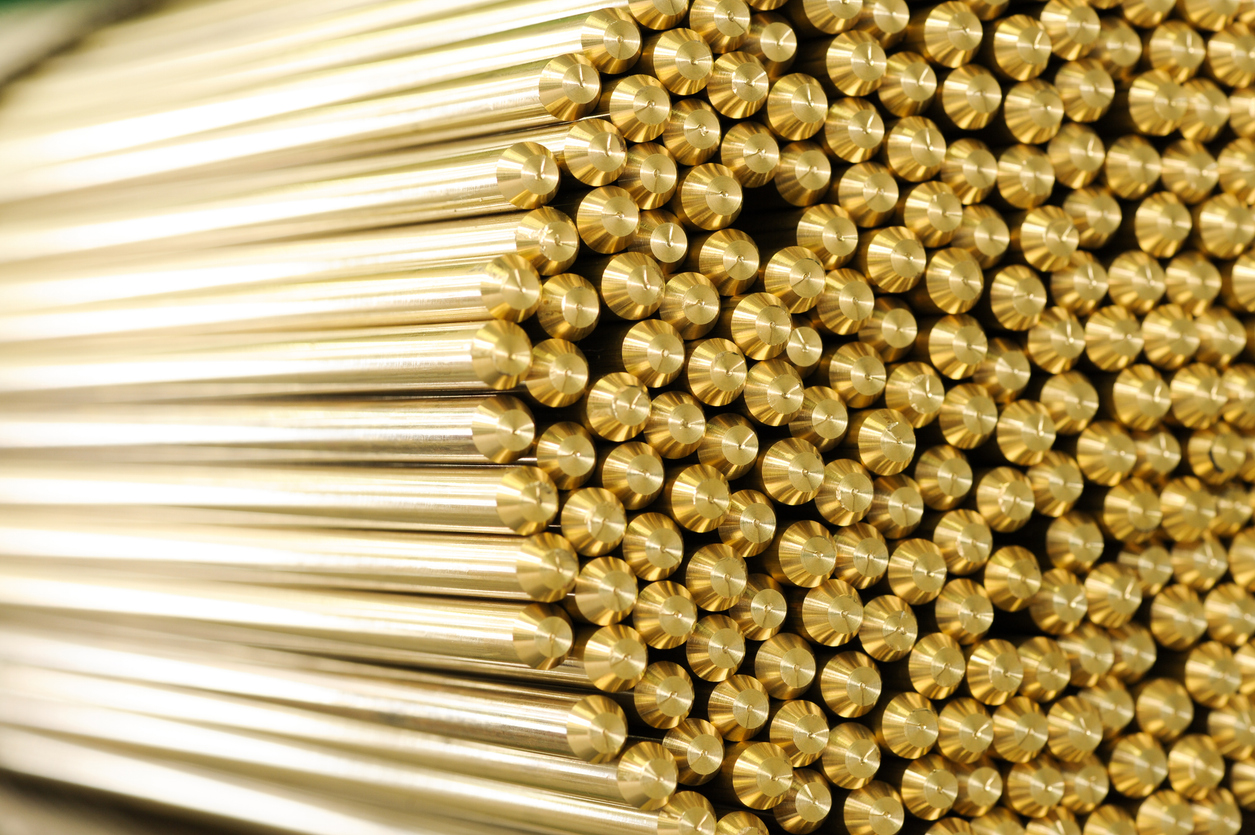
Across the non-ferrous landscape, brass pricing continues to shadow copper. According to Fastmarkets’ March 2025 Methodology and Specifications, U.S. copper rod delivered to the Midwest carries a monthly premium based on 99.95–99.99 % purity, 8 mm rod, quoted in U.S. ¢ per lb. That Midwest rod premium forms the foundation for domestic brass mills — the starting point before zinc, cutting, and freight get layered in.
On the other side of the world, No. 1 and No. 2 copper scrap shipped into China act as the baseline for recycled brass feed. These grades trade on LME/Comex discounts and are assessed monthly in ¢ per lb. — “Candy/Berry” for clean high-grade scrap with 97 % recovery, “Birch/Cliff” for mixed copper at roughly 94 %. When scrap prices soften overseas, billet producers in Asia can undercut the cost base for North American rod, and those offers quietly drift into U.S. distributor quotes months later.
Today, the Midwest copper rod premium is still elevated, while Asian scrap discounts have widened — meaning U.S. mills are paying more for base metal at the same time foreign billet is getting cheaper. That explains much of the current spread between domestic and pre-tariff foreign brass: copper cost on one side, leftover low-duty inventory on the other.
Domestic mills like Wieland Chase, Mueller Brass, Aviva Metals, and Chase Brass & Copper Company continue to price off Midwest copper with small adjustments for alloy and conversion. While no mill has posted public surcharges, trade feedback points to 8–10 ¢/lb. over copper for standard brass rod conversion costs — steady but firm.
Mill Activity
The mills haven’t slowed, but the tone is cautious. Most have reported solid bookings through Q3, though buyers are stretching deliveries to see whether tariffs hold. Midwest service centers are keeping inventory light; a few have turned to domestic rod mills in Ohio and Michigan for just-in-time cuts rather than gamble on import replenishment.
Wieland Chase continues to run full extrusion shifts, emphasizing North American sourcing. Mueller has leaned on its U.S. mill runs to market “Made in America” stability, while Aviva’s Houston and Lorain operations have picked up slack for quick-ship bar and tube. Chase Brass, still one of the bellwethers, is quoting conservative lead times but hasn’t reported disruptions.
The Outlook
Between tariffs, scrap flows, and copper’s own volatility, brass pricing feels like it’s balancing on a fence post. The foreign backlog has softened prices in the short term, but most shops expect equilibrium by winter. When that happens, the domestic-versus-import spread will shrink back into a few cents per pound — the usual freight and handling differential — instead of the $2 gap seen this summer to recent date.
We shall see if my thoughts stand. I appreciate your time to read.
Redmond



Leave a Reply