

Somewhere between Houston’s port cranes and Oklahoma’s long stretches of rail line, something’s shifting in the metals world. The South-Central U.S.—especially Texas, Oklahoma, and Louisiana—has been quietly becoming one of the most strategic zones in the country for domestic alloy production.
You can see it from the road: new fabrication buildings going up outside of Temple, long-haul trucks rolling out of Houston loaded with brass and bronze stock, and the steady hum of expansion at long-time suppliers that never left the region. What’s taking shape here is a realignment of how and where America makes its metals.
Why everyone’s looking this way
Location is the biggest edge. Texas sits in the middle of everything: Gulf ports for import/export, a dense web of interstates and Class-I railways, and access that reaches both coasts. That makes it faster and cheaper to move heavy material compared to relying on coastal routes.
Energy prices are still manageable compared to the East or West Coasts, and state and local governments have made a habit of welcoming manufacturers. Seguin, for instance, landed a $35 million United Alloy facility a few years back—proof that mid-sized towns are competing hard for industrial projects that used to go elsewhere.
Concrete production moving in
Here’s where the strategy becomes real:
- SeAH Superalloy Technologies is putting $110 million into its Temple, TX plant to produce aerospace-grade materials domestically.
- In Oklahoma, a new $4 billion aluminum smelting project is underway, the first of its kind in decades, expected to produce over 600,000 tons annually.
- Louisiana also holds steady in non-ferrous processing and rolling, particularly along its refinery corridors.
Together, these plants and foundries show the South-Central corridor isn’t just distributing alloys—it’s producing them.
Why it matters for brass, bronze, and copper
The industries that use red metals are already here: oilfields, manufacturers, aerospace, and fabricators up and down I-35 and I-10. But what really sets this region apart is who’s supplying them.
In Dallas, McMurray Metals Company has been a mainstay since 1941—stocking brass, bronze, and copper bar, sheet, plate, and tube for machine shops and OEMs across Texas, Oklahoma, and Louisiana. Down in Houston, Aviva Metals maintains one of the largest inventories of copper-based alloys in the country, serving petrochemical, marine, and industrial markets.
In Oklahoma, regional suppliers like Alro Metals Outlet (Tulsa) and Industrial Metal Supply serve fabricators needing quick-turn copper and bronze. And across Louisiana, firms such as Metal Supermarkets Baton Rouge and Sabel Steel’s Gulf operations keep red metals close to shipyards, refineries, and manufacturers along the Gulf Coast.
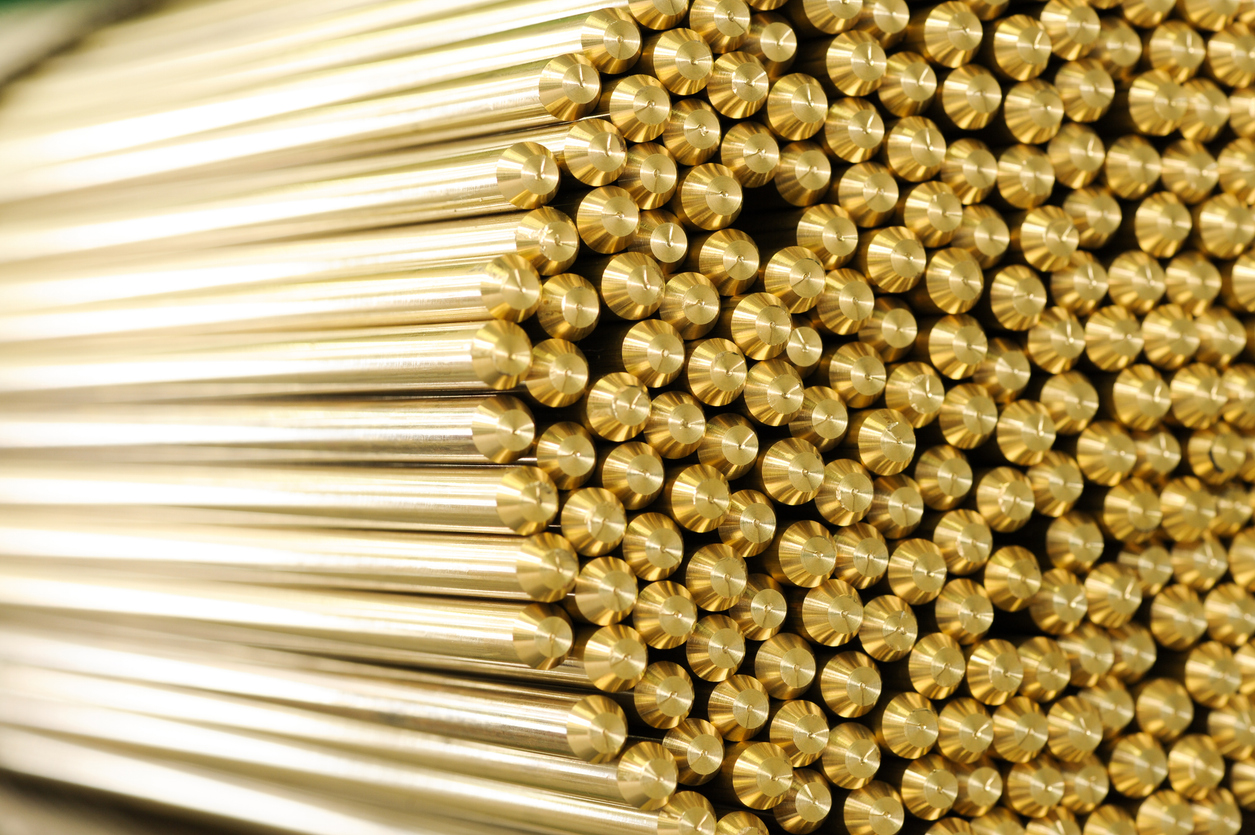
That regional density means a brass round bar shipped from Houston to Tulsa or Shreveport can be at the door the next morning -no container tracking, no port fees, no waiting.
That kind of speed matters in an environment where tariffs, freight surcharges, and shipping delays have made buyers more cautious. Domestic availability isn’t just patriotic—it’s practical.
The new neighbor: AI and the metals behind it
There’s another force moving into this same territory: AI-driven data centers.
Texas has become a magnet for them—projects like Crusoe Energy’s $11 billion “Stargate” campus near Abilene, a 250 MW net-zero data center in the Permian Basin, and Vantage Data Centers’ $25 billion AI campus in North Texas are setting new records for power demand. Meta recently added another $1.5 billion facility in the state.
Oklahoma is seeing its own surge. Google’s multi-billion-dollar data-center campus in Stillwater is part of a $9 billion statewide AI and cloud expansion. Louisiana joined the race this year when Meta chose Richland Parish for a $10 billion AI-optimized complex.
Every one of these facilities consumes copper, aluminum, and specialty alloys for cooling systems, transformers, and bus bars. For regional distributors already moving red metal, this emerging AI infrastructure has become the next big demand driver.
(A deeper look at the AI build-out and what it could mean for red-metal demand across the South-Central U.S. will be the focus of a separate Market Watch post soon.)
The takeaway
There’s a quiet momentum building here. From San Antonio to Shreveport on the I-35 corridor to Shreveport down I-49 S into Lafayette all the way to the ports, you can feel it in the air—new alloy plants breaking ground, long-established distributors expanding capacity, and massive tech infrastructure piling on top of it all.
The South-Central region is now a key area for metal production and high-tech development. For anyone working with brass, bronze, or copper, it’s time to pay close attention to what’s rising just off the interstates.
Until next time.
Sources (for verification)
- Business Facilities: United Alloy Inc. facility in Seguin, TX
- CoStar News / Plant Services: SeAH Superalloy Technologies investment in Temple, TX
- Manufacturing Dive: MP Materials rare-earth production in Fort Worth, TX
- Aviva Metals corporate site, Houston, TX
- McMurray Metals Company official site, Dallas, TX
- Texcast, Inc. and IPC Foundry Group production details
- AP News: Oklahoma $4 billion aluminum smelter announcement
- Data Center Dynamics / Reuters / Meta Press / Journal Record: AI data-center developments in TX, OK, LA


Leave a Reply